
This post may contain affiliate links. Please read our disclosure policy.
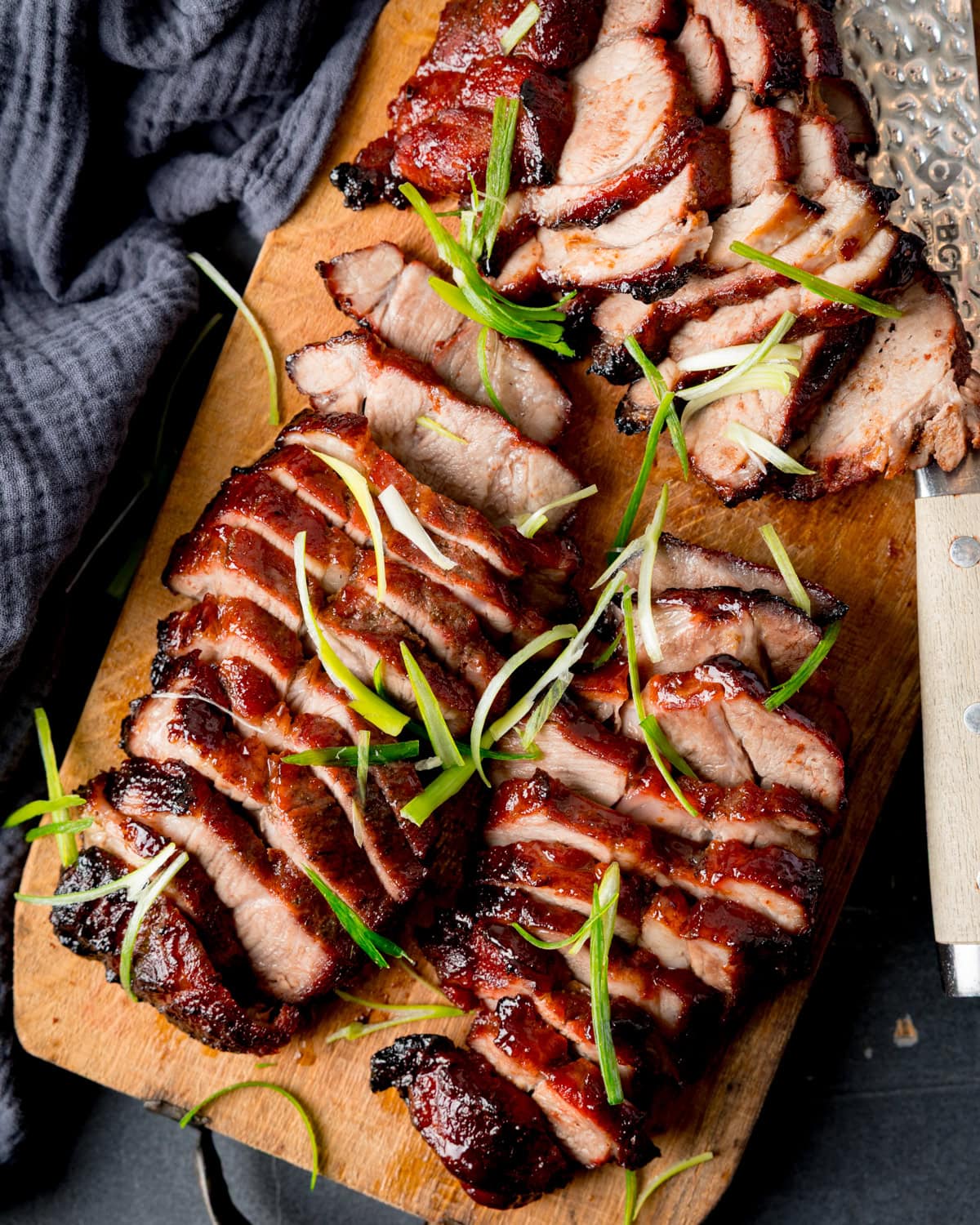
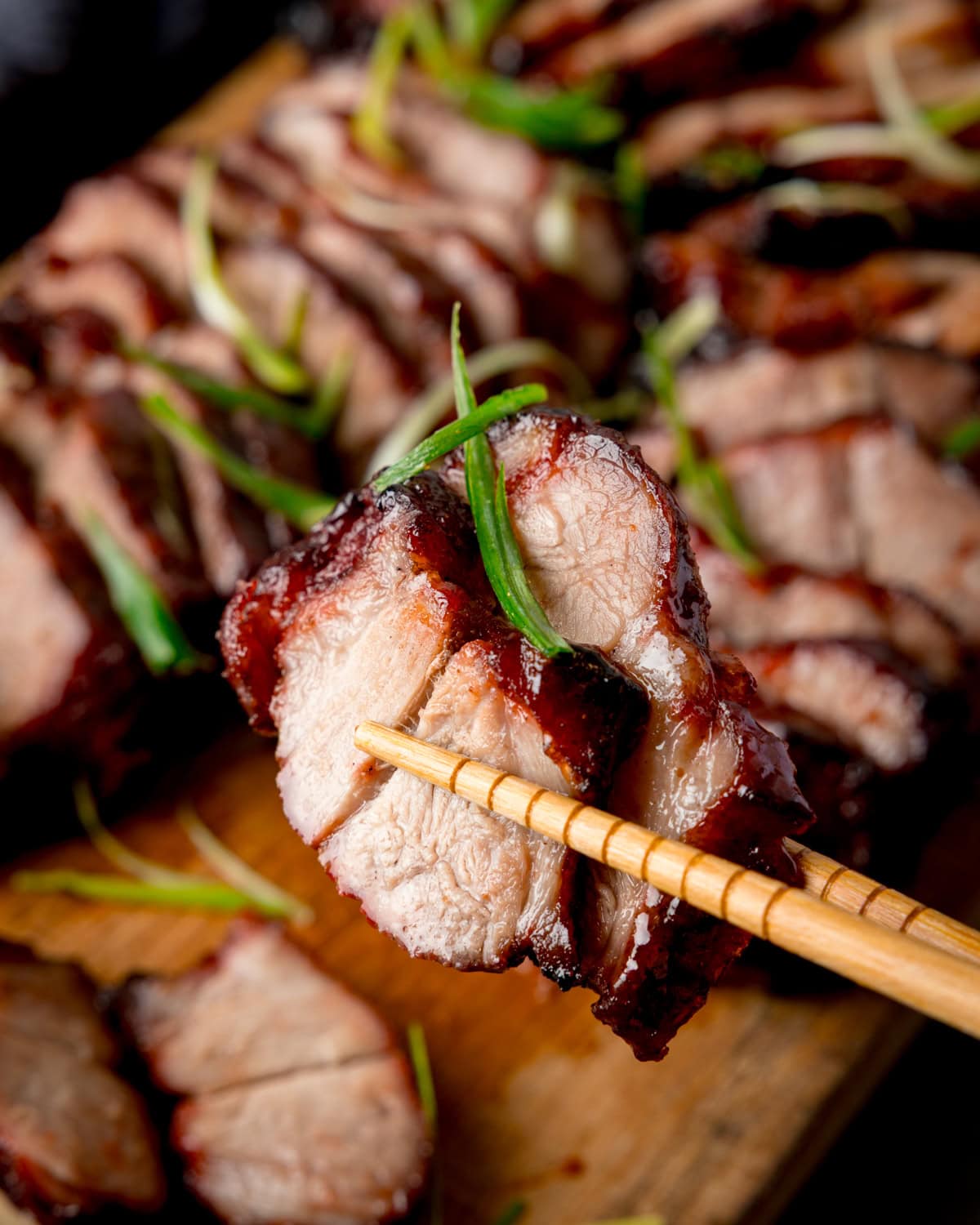
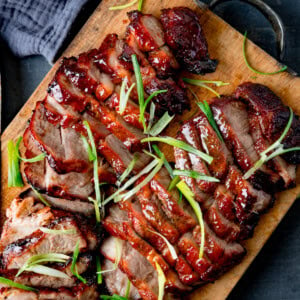
Sticky, glossy Char Siu Pork with tender meat, caramelised edges and that irresistible savoury-sweet Chinese barbecue flavour. Here’s how to make it at home!
Nicky’s Notes

Those little bits of char siu pork you get in special fried rice and Singapore noodles are the absolute best bits, aren’t they?
Sticky, sweet, savoury, slightly smoky, with those caramelised edges that you know are going to be extra tasty.
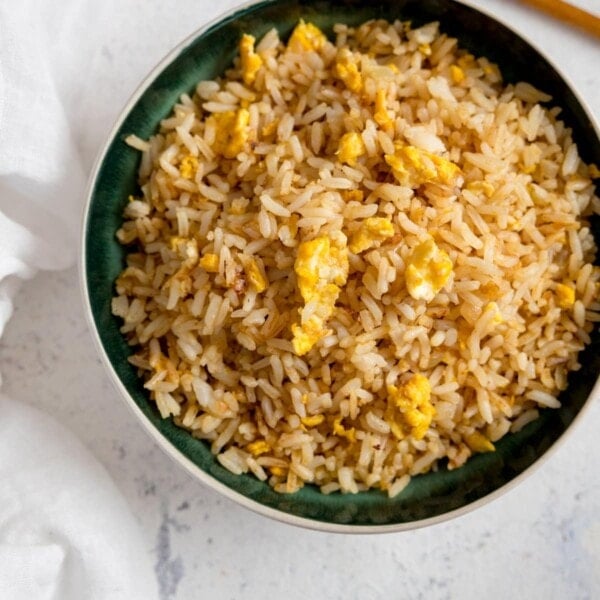
Cut it into slices and serve with rice, over noodles, stuffed into bao buns, or chop into bite-size pieces to add to fried rice and Singapore noodles (recipe coming soon).
Boy! This recipe took some attempts to crack, but we got there in the end. Special points:
- Don’t use pork shoulder steaks or pork tenderloin (too thin or lean and will likely dry out before the edges caramelize).
- Don’t use too much red food dye (Chris and the kids had red tongues and fingers for the rest of the day).
- Do stab the pork lots of times with a fork to tenderize the meat and help it to absorb the marinade flavours.
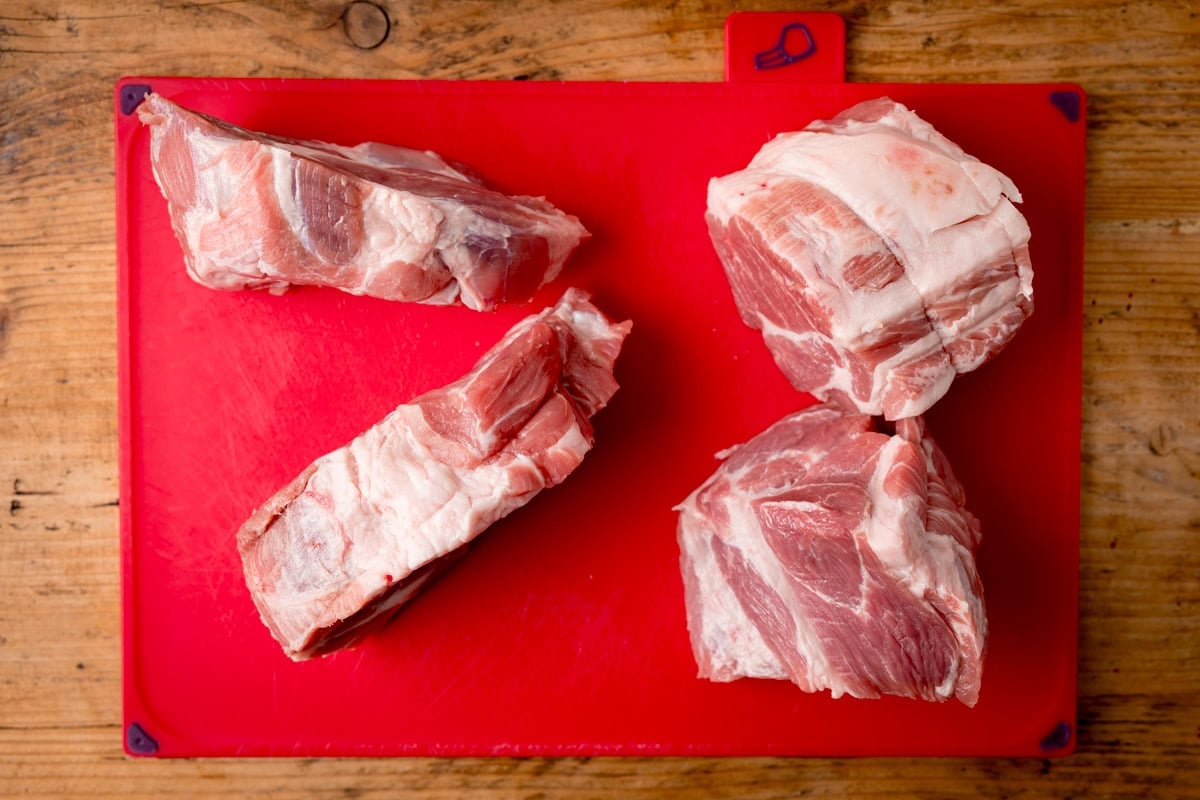
- Do use a boneless, rindless pork shoulder joint and chop it into nice big chunks. Those pieces will have a bit of fat to keep the meat tender, and they’re big enough to stay moist in the middle, but still have plenty of surface area for the marinade and baste to cling to.
- Do use a wire rack over a lined roasting tray if you have one. It helps the heat circulate around the pork, so the edges caramelise more evenly instead of sitting in the juices.
- Do line that tray well too (or even better use a disposable foil tray). Sticky glaze is glorious on pork and deeply annoying on washing-up.
Table of Contents
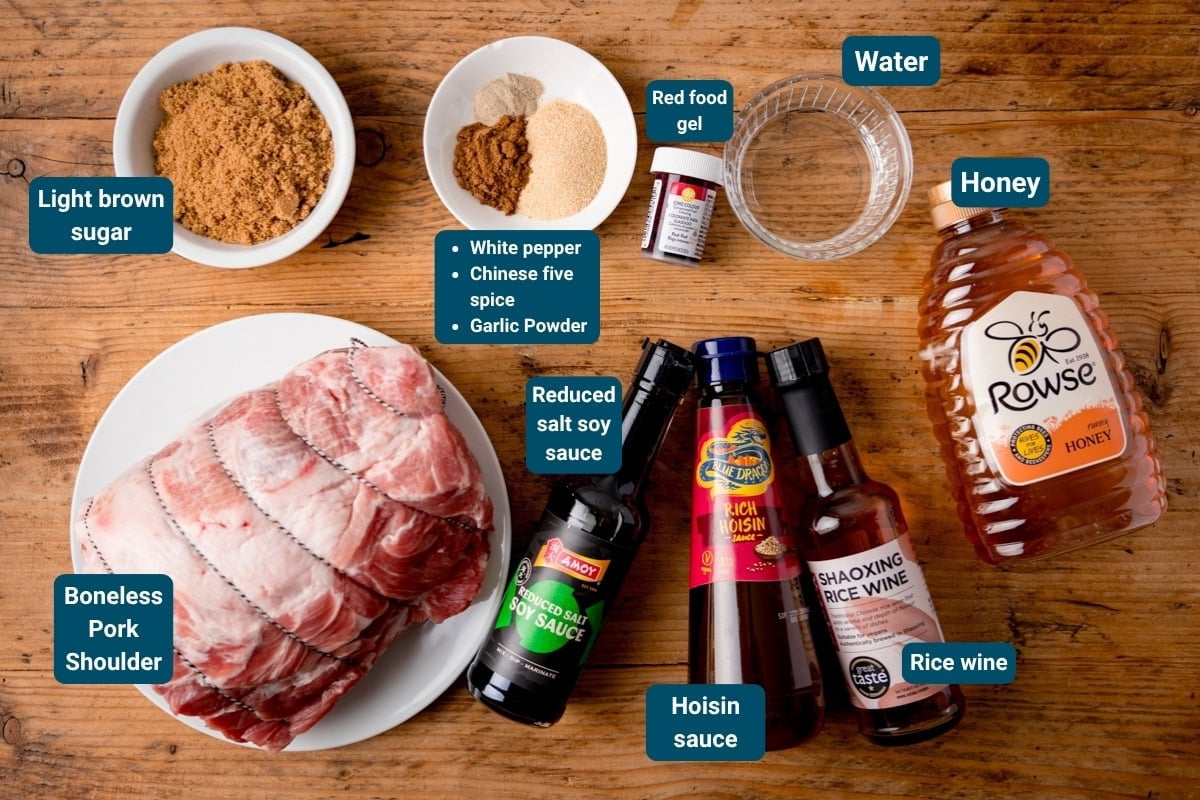
📋 Ingredients for Char Siu Pork
***Full recipe with detailed quantities in the recipe card below***
What cut of pork for Char Siu Pork?
- I use a boneless, rindless pork shoulder joint chopped into large chunks. I find this works best for Char Siu Pork because it’s flavourful, affordable and easy to find in UK supermarkets. It has enough marbling to stay tender while roasting, which makes it a great choice for sticky pork recipes where you want juicy meat and caramelised edges.
- I tested with pork shoulder steaks, but found they’re too thin, so they overcook before caramelised properly. Also, you don’t get those nice wide slices (just thin slivers).
- I also tested with pork tenderloin but found it dried out more easily (before the outside caramelised properly) and this cut doesn’t give quite the same rich, succulent Chinese BBQ pork texture, due to the fact it’s much leaner.
How to get the red colour on Char Siu Pork
Red food gel gives the best colour. Go for the gel, rather than red food liquid dye, as it’s stronger and you need less for the nice deep red colour.
Red food dye swap:
You can leave the red food dye out if you don’t want to use food colouring, or swap for 1–2 tablespoons of liquid from a jar of red fermented bean curd. This will give the pork a more traditional savoury depth as well as a reddish colour, though the colour will be a little more muted so you won’t get the same bright colour that you get from the Chinese restaurant.
NOTE: Red bean curd liquid is salty, so you need to reduce the saltiness elsewhere slightly. You can do this by reducing the amount of soy sauce in the recipe to 1-2 tbsp (instead of 3).
Abbreviated Recipe
***Full recipe with detailed steps in the recipe card below***
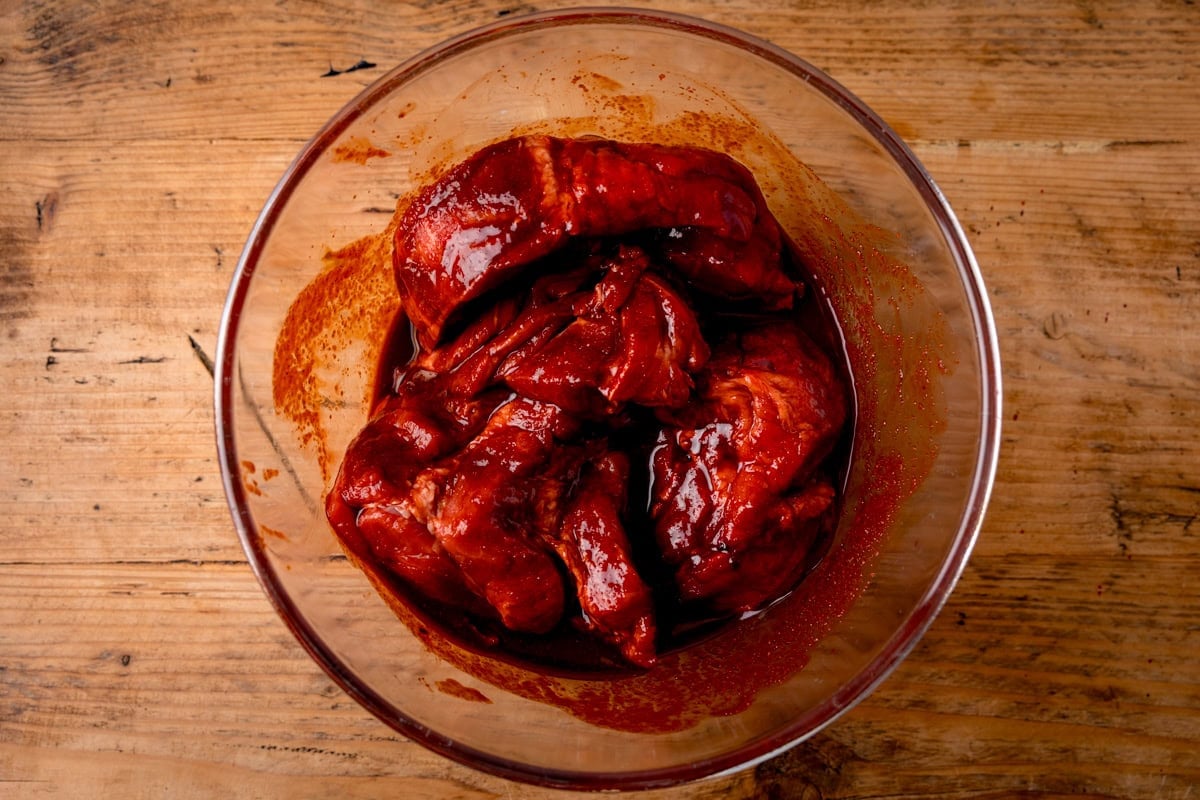
Cut the pork into large pieces, prick all over, then marinate for 4–24 hours. Roast on a rack over a foil-lined tray with boiling water underneath at 190C/375F fan for 15 minutes. Baste, roast for 15 minutes, then repeat once more. Brush with the remaining baste, increase to 230C/450F fan and cook for 10 minutes to lightly char. Rest before slicing.
Recipe Tips
- Before marinating, stab the chunks of pork lots of times with a fork on all sides. This helps to tenderize the pork, without flattening it. It also helps the marinade to penetrate the pork better.
- Don’t go overboard on the red food gel. I don’t recommend using more than 1/2 tsp. I tried using different amounts, and dyed my family’s hands and mouths red when I used too much!!
Pin this now to find it later
Pin It🍽️ What to serve it with
Make ahead and Leftovers Guide
- Char siu pork can be made ahead, then cooled covered and refrigerated for up to 3 days. It’s best if left unsliced, but can be sliced, if preferred. Or you can chop into small chunks if you know you’re going to use it for fried rice or Singapore noodles.
- Warm in a covered dish with a splash of water at 160C/320F fan until piping hot. If already sliced, reheat slices with a little oil, in a frying pan over a medium heat to bring back the sticky edges.
- To freeze, cool it completely, then wrap tightly or place in an airtight container and freeze for up to 3 months. It’s best frozen in larger pieces rather than slices, as this helps keep it juicier. Defrost overnight in the fridge, then reheat as per above instructions
📺 Watch how to make it
Char Siu Pork Recipe
Ingredients
Marinade:
- 2 tsp garlic powder
- 1.5 tsp Chinese five spice
- ¼ tsp white pepper
- 3 tbsp low sodium soy sauce light or all-purpose
- 5 tbsp (50g) light brown sugar
- 3 tbsp hoisin sauce
- 2 tbsp rice wine shaoxing
- 1/4-1/2 tsp red food gel optional (the amount depends on how red you want it)
Pork and Basting ingredients:
- 1 kg (2.2lbs) boneless, rindless, pork shoulder joint
- 2 tbsp hoisin sauce
- 2 tbsp honey
- 2 tbsp water
Instructions
- Mix together the marinade ingredients in a large bowl.2 tsp garlic powder, 1.5 tsp Chinese five spice, 1/4 tsp white pepper, 3 tbsp low sodium soy sauce, 5 tbsp (50g) light brown sugar, 3 tbsp hoisin sauce, 2 tbsp rice wine, 1/4-1/2 tsp red food gel
- Chop the pork into 4 or 5 pieces – each about the size of a 250g( 1/2 pound) block of butter. Cut with/along the grain (so when you slice it for serving, you'll be slicing across the grain).1 kg (2.2lbs) boneless, rindless, pork shoulder joint
- Take the pork pieces and stab lots of times with a fork on all sides. This helps to tenderize the pork, without flattening it. It also helps the marinade to penetrate the pork better.
- Add the pork to the marinade and mix the pork around in the marinade to completely cover it (you may want to use gloves or a set of tongs so you don’t get red food dye on your fingers).
- Cover the bowl with clingfilm and place in the refrigerator to marinate for at least 4 hours (up to 24 hours).
- Remove the pork from the refrigerator about an hour before you want to cook it, to let it come closer to room temperature.
- Preheat the oven to 190C/375F (fan). Line a baking tray with foil and top with a wire rack. Pour 240ml (a cup) of boiling water into the bottom of the tray.
- Add the pork to the wire rack and place in the oven for 15 minutes.
- After 15 minutes, mix together the basting ingredients. Brush the pork pieces with 1/3 of the baste. Place back in the oven for 15 minutes.2 tbsp hoisin sauce, 2 tbsp honey, 2 tbsp water
- Brush again with half of the remaining baste. Place back in the oven for a 15 minutes.
- To finish, we want to caramelize and char the pork a little more. Brush on the remaining baste and turn up the oven to 230C/450F (fan). Cook for a final 10 minutes (alternatively, place under a hot grill/broiler for a 2-3 minutes). *Note* If the pork is already looking quite charred on top by this point, you can turn it over, baste it and cook for the final 10-mins – so it chars a little on the underside too.
- Allow to rest for 10 minutes before slicing and serving.
Video
Nutrition
Nutrition information is automatically calculated, so should only be used as an approximation.
🍲 More fantastic Chinese-inspired recipes
Some of the links in this post may be affiliate links – which means if you buy the product I get a small commission (at no extra cost to you). If you do buy, then thank you! That’s what helps us to keep Kitchen Sanctuary running. The nutritional information provided is approximate and can vary depending on several factors. For more information please see our Terms & Conditions.











I am a massive fan of Nicky’s cooking and have been for a long time now. it is the range and type of cooking, the accuracy and the taste. . . Moi.
And this recipe is . . unmistakenly Char Siu but even better. It is beautiful. The pork is so juicy because of the way it is cooked, with that crispy uber tasty outer.
Did enough to freeze some . . But it didnt make it to the freezer!
Thanks Nicky, looking forward to cooking it for lunch having marinated it overnight. I think we will serve it with fried rice and some green beans from the garden. Yum😋
Thanks Nicky, looking forward to cooking it for lunch having marinated it overnight. I think we will serve it with fried rice and some green beans from the garden. Yum😋
Wow, been looking for the perfect char Sui for 40 years as my local takeaway used to sell it, moving around the globe I lost touch and was never ever been able to get that char Sui hit until now, thank you 👌😋😘
Absolutely love this Char Sui Pork I made today, so worth the effort, I’m going to make a special fried rice with this.
Thank you so much! My Grandkids love it.
Sheila
I would like to send a pic but there doesn’t seem to be an upload option.
I have just bought your book It’s all about dinner but it doesn’t have the red pork recipe so I’ve saved it to my email, I received the book today and look forward to cooking some lovely dishes.
The book has beautiful photos and easy to follow recipies.
Thank you.
Sheila London Uk
Thank you for buying the book Sheila – I hope you love it!
Unfortunately we can only fit 80-100 recipes in a book, but we have over a thousand recipes on the website and we’re adding new ones all the time 🙂
Looks great I must try it
Another delicious recipe, thank you 😋
Hi, can I use pork belly instead of shoulder ? Thank you
Hi Jan, I haven’t tried this recipe with pork belly. I think it would work, but it would take longer for the fat to soften and render (probably an hour+ altogether, so a lower cooking temp would be needed, finishing off with a hotter blast for the last 15 mins or so). I would also cut the pork belly into strips and stab the meat and fat layers with a fork to tenderize before marinating.
Fabulous 👌